maria esther rodriguez
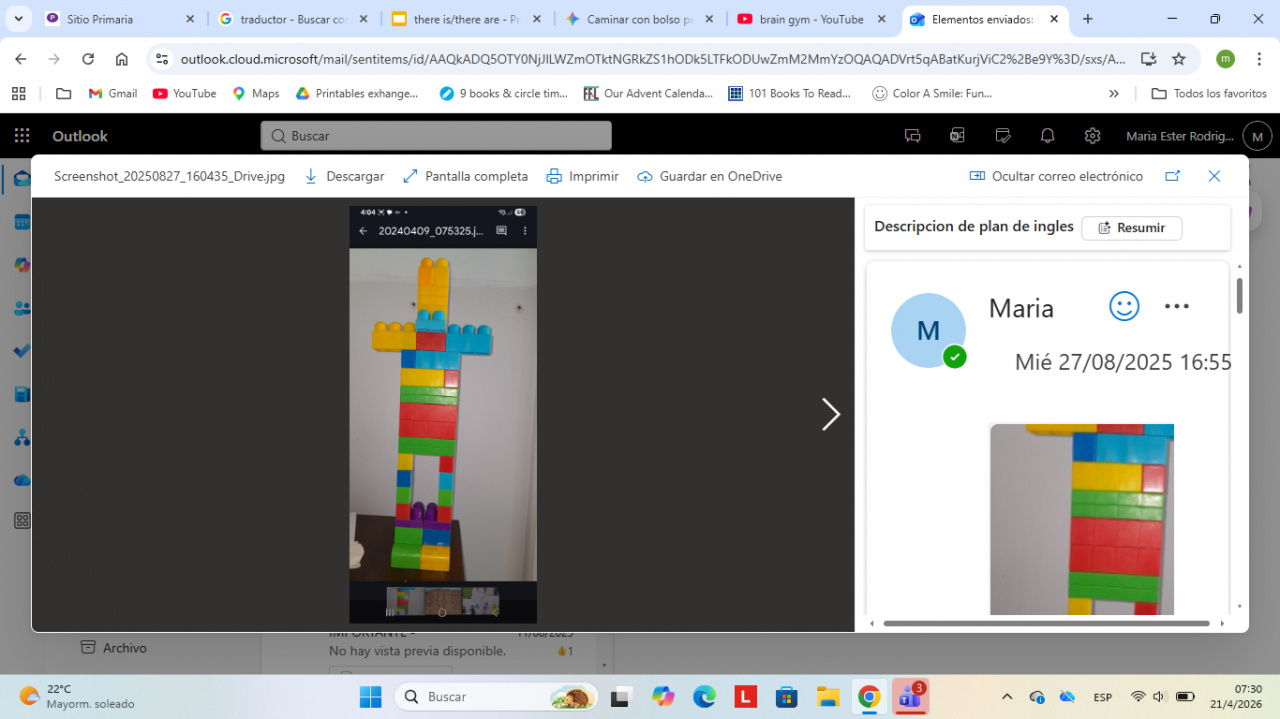
legos to practice body parts vocabulary
My name is Maria, and I work as an English as a Foreign Language (EFL) teacher in Costa Rica. Teaching a foreign language to early childhood learners requires high energy, patience, and, above all, a deep understanding of how young children naturally absorb language: through movement, play, and tangible interaction with their environment.This week, my four-year-old students embarked on an exciting linguistic journey exploring human body parts vocabulary. To ensure maximum engagement and retention for this developmental age group, I designed a progressive, three-stage multisensory lesson plan that moved from total physical response to fine motor manipulation, culminating in creative, communicative output.Step 1: Kinetic Introduction through Total Physical Response (TPR)
We kicked off the unit by tapping into the children's natural need for movement. Young learners have short attention spans and learn best when language is anchored to physical actions. We started with lively, interactive action songs and chanting games that encouraged Total Physical Response (TPR). As we sang cheerful melodies, the children pointed to, touched, and shook the specific body parts being named in English—such as their head, shoulders, knees, and toes.By pairing the auditory input of the foreign vocabulary with kinetic movement, the children created strong cognitive connections without needing direct translation into Spanish. Laughter filled the classroom as they raced to touch their toes or wiggle their fingers on command, transforming vocabulary acquisition into an energetic game.
Step 2: Fine Motor Discrimination with Bottle Caps.Once the children had familiarized themselves with the basic terms through movement, we transitioned to a focused table activity designed to reinforce visual recognition and fine motor skills. I provided each child with a laminated paper silhouette of a human body, accompanied by a collection of colorful plastic bottle caps.As I called out specific body parts in English, the children used the bottle caps as markers to identify and cover the corresponding areas on their silhouettes—placing a cap on the head, two on the shoulders, and so on. This tactile, hands-on task challenged them to transition from gross motor action to precise visual discrimination, reinforcing their receptive vocabulary in a playful, low-pressure format.
Step 3: Construction and Communicative Output with LEGO Bricks
The culmination of our week's learning was a creative construction challenge that fostered both collaboration and early speaking skills. The children were given a box of LEGO bricks and instructed to build their own unique human figures. Watching them carefully snap the blocks together to create arms, legs, heads, and torsos was a testament to their spatial awareness and imagination.Finally, we moved into the production stage, which was the most rewarding part of the sequence. Each student stepped forward to proudly present their LEGO creation to the rest of the group. Pointing to their figures, they successfully named and described several body parts in English, saying sentences such as, "Look! This is the head," or "These are the legs." Even our most hesitant speakers beamed with pride as their peers applauded their mini-exhibitions.This week’s lesson served as a wonderful reminder that when language learning is active, tactile, and rooted in play, young children not only master vocabulary effortlessly, but they also build the confidence to speak out loud